Friday, March 18, 2022

Housing Market Holding up Against Rising Rates

Rising interest rates continue to plague buyers, particularly those in the entry level price ranges. Higher rates erode buying power for those using a loan to purchase. As rates approach five percent I like to remind everyone that these are still quite a bit lower than the fifty year average so we are not into a "high interest" market just yet. It seems to show as prices on new listings are still strong and homes are still selling in a matter of days. Inventory levels locally are at all time lows. This means fewer properties are available and even as buyers are priced out in the rising rate economy, there are still too few listings to choose from.

Buyers still need to be ready to compete with other buyers in a multi-offer environment. At this point waiting for a market slowdown could end up costing buyers more money. I have written a great deal about the effects of interest versus the effects of price. Even if the local prices were to drop 5-10% over the next year, the people that bought last year at 3% are in better shape than those that buy at 10% less price a year later at 5.5%. More importantly is the timeframe of ownership. Most people will stay in that house for 5 years and if pricing does enter a decline then that might be extended longer. The higher interest rate chews away at your equity position faster than the lower rate.

Barring a total collapse in housing like we had back in 2009-2011 it is better to buy now with rates low then to wait until rates are actually high. A high interest rate market would have rates well above 6% but I don't think we should see the double digit rates we had back in the 1970s and early 80s. The Fed has adopted a much better model for managing inflation money squeezes than we had 40 years ago.

If you are on the financing bubble, find a house fast, write an offer, and get situated before you are locked into another decade of making your landlord rich.

Friday, March 11, 2022

Market Forces are Colliding

I have been on about the interest rates, inventory, prices, and economic factors all converging on our red hot real estate market here in Clark County and around the Metro Area. Generally real estate trends are not that hard to follow and short term predictions have been reasonably easy to make. But the last several years we have seen several wildly different flies in the ointment of the market.

We just came out of a serious pandemic that had millions of people out of work, we had a government infuse trillions of dollars into economic aid during the pandemic, and people have been slow to return to the workforce. On top of that we have pressures coming from inflation and the climbing interest rates associated with hyper-inflation.

What many see as a flood of buyers to the market is in reality a lack of sellers in the market. We are sitting on a great time to be a seller and yet sellers are not selling. So despite the fact that higher rates are eliminating buyers from the marketplace, prices are still rising as even fewer properties are listed for sale. This is one of the most bizarre real estate market scenarios I have seen in more than 20 years in the business.

Higher rates would typically price out buyers thus lowering demand and potentially lowering prices. But inventory levels are at historic lows right now and that is pulling harder on the market right now than the higher interest rates. Valuations may not have the same 18% year over year growth like 2021 but we are still on pace for double digit growth even as rising interest rates begin eliminating the buyer pool.

One of the issues in favor of higher home prices is the absolute shortage of labor in the workplace. Wages are rising as desperate employers seek employees to fill millions of open jobs nationwide. Skilled labor is commanding the highest wages we have seen in decades even when adjusted for inflation. It is rare to have wages keep up with inflation but so far it has been close enough to keep enough buyers in the pool to maintain a seller's market.

Market forces are colliding and this is not sustainable, something has to give. I think interest rates will be the levee breach the brings the flood. Interest rates under 6% are still historically lower than average, but after years of sub-4% rates even low rate sin the 5s will cause buyers to fall out of the market. I think 5% rates will be the point where we see a softening in demand to get prices back into to a healthy growth cycle. If rates pop up over 6% we may see actual prices come down a bit.

No one knows when a flattening or drop in valuations will come, but we are definitely getting close to the top of the market and sellers thinking about maximizing the value in their home ought to list now or very soon.

For buyers buying right now, you should be prepared to stay in the new home for several years. Unless you are paying cash or putting more than 20% down it is a good idea to plan on five years in a home you buy under these market conditions.  

Friday, March 4, 2022

Real Estate Market Still Ultra Tight

Despite the uptick in rates and turbulent economy, the market remains very tight on inventory. This extreme constriction of inventory is leading to upward price pressure that is out of whack with general economic conditions. Let's be clear, this market suffers from a lack of listings rather than an abundance of buyers. 

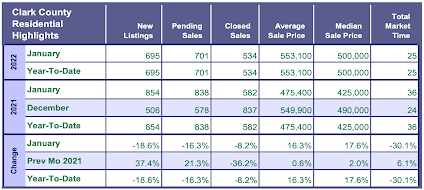
The chart below from the local MLS shows clearly that pending sales are only slightly higher than new listings last month. That is a very healthy ratio. Year over year median price was a robust 17.6%n and that one stat alone is why the severe price growth will be difficult to match again in 2022. Incomes are rising but at a lethargic 3-5% so tens of thousands of potential buyers have been priced out of our market. 


© RMLS 2022

The only way this market can continue to see this kind of price appreciation is from external influence. New residents moving into the area from higher priced areas such as Washington County, OR, King County, WA or Coastal California. This is the scenario that results in some residents have bitterness that their children or grandchildren cannot afford to stay local.

It is one thing to be a victim of your own success, to an extent Clark County is in fact that very thing, but it is another to be flooded with 'refugees' from failed places like California, Portland, and Seattle. The supply chain problems and lack of willing workers has led to higher building costs and thus more expensive new homes. The high cost of a new construction home definitely opens up the resale market to upward price pressure. 

This of course will inevitably lead to concerns about a "bubble" in the market. The last several years have seen a conjunction of conditions rarely seen in real estate and that is: cheap money, high wages, and a solid economy. Now we are adding inflation and supply chain problems to the mix. The latter two need to be dealt with because if they are not, then we can count of a rapid rise in lending rates and that could pull the rug out from under the market. Cheap money has been driving the real estate market for nearly a decade now including single family, multi-family, and commercial real estate. When the interest rates rise the ability to continue the pace of development could dry up which then leads to loss of high paying jobs and an economic decline either locally or nationally.

Buying a home right now is still a solid investment because of the low interest rates, but buyers should be willing to sit tight in the home for several years in case a price decline arises in the next year or two. Use a fixed rate loan and you can ride out a market retraction pretty easily.